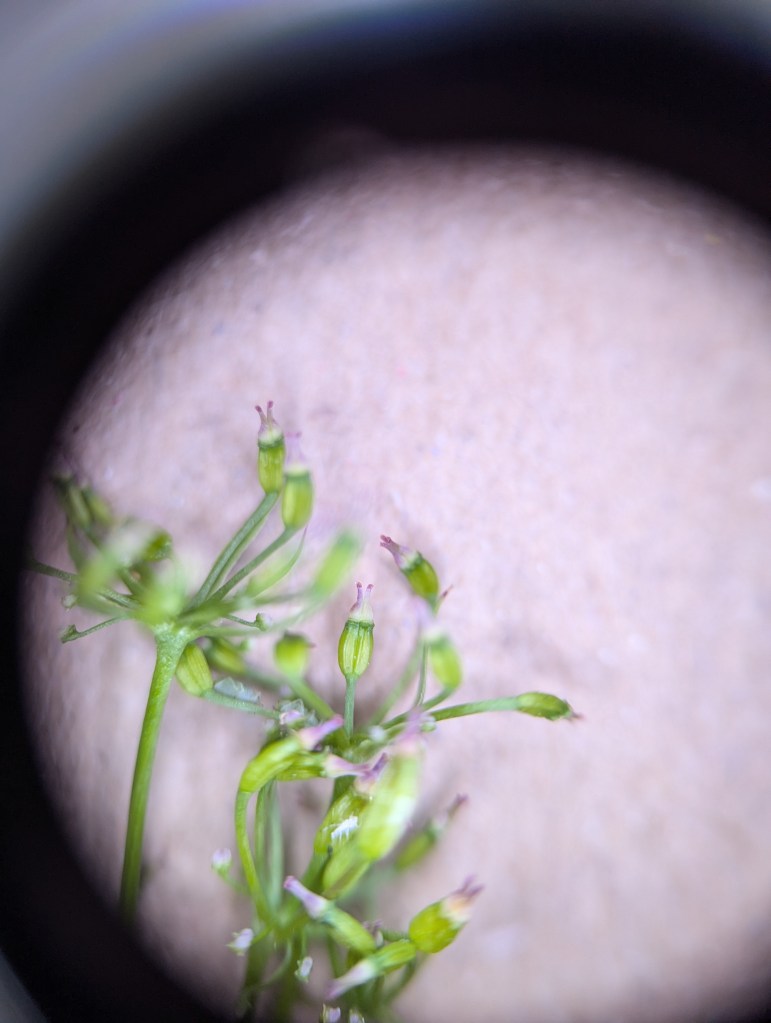
Botany
Learning to see plants is like learning to read — slowly at first, then suddenly you see familiar patterns and shapes everywhere. This toolbox holds the books, tools, and moments that have helped me grow as a botanist. I hope they help you too.
Ways to learn

Botanical Society of Britain and Ireland – their Identiplant course is fantastic.
Field Studies Council – both online and at centres nationwide, a range of excellent courses.
Eventbrite – great resource for online learning, use keyword searches like ‘botany’ or ‘wildflower’.
The National Plant Monitoring Scheme – for when you’re feeling a teeny bit more ambitious…
Five excellent beginner-ish botany books
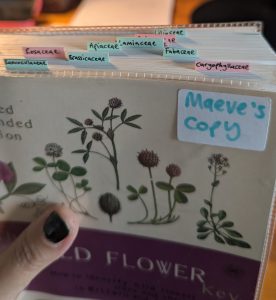
1. The Wild Flower Key by Francis Rose (Revised by Clare O’Reilly) – Best for: Beginners to intermediate botanists
2. Collins Wild Flower Guide by David Streeter – Best for: Visual learners and casual wildflower identification
3. Plants and Habitats by Ben Averis – Best for: Combining species and habitat knowledge
4. The Pocket Guide to Wildflower Families by Faith Anstey – Best for: Beginners starting to use botanical keys
5. Common or Garden by Ken Thompson – Best for: The extraordinary splendour of the species we encounter daily
Getting dissecting

The tools you might need / will fall in love with:
A 10x magnification hand lens or ‘loupe’ – avoid more magnification than this at first!
A craft knife, cutting board and pointy tweezers for delicate dissections.
Best practice for specimen collection
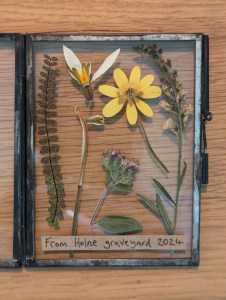
1. Collect responsibly – click to open a .pdf of BSBI’s Code of Conduct
- Never uproot protected species or collect from small or vulnerable populations.
- Seek landowner permission before uprooting any wild plant.
- Prioritise common or abundant individuals, especially when dealing with annuals or casuals.
2. Target critical groups
- Collect specimens for groups that are difficult to identify in the field (e.g. Rubus, Taraxacum, Salix), especially where expert verification is required.
- Avoid collecting rare plants unless for urgent identification or conservation needs.
3. Gather useful material
- Include multiple individuals if needed to show variability.
- Collect a representative specimen showing diagnostic features: leaves (upper and lower), flowers, fruits, roots (only when essential), and variation.
 Moor Questions